Press Archive

Building North America’s Largest Bitcoin Mine: Whinstone Data Center

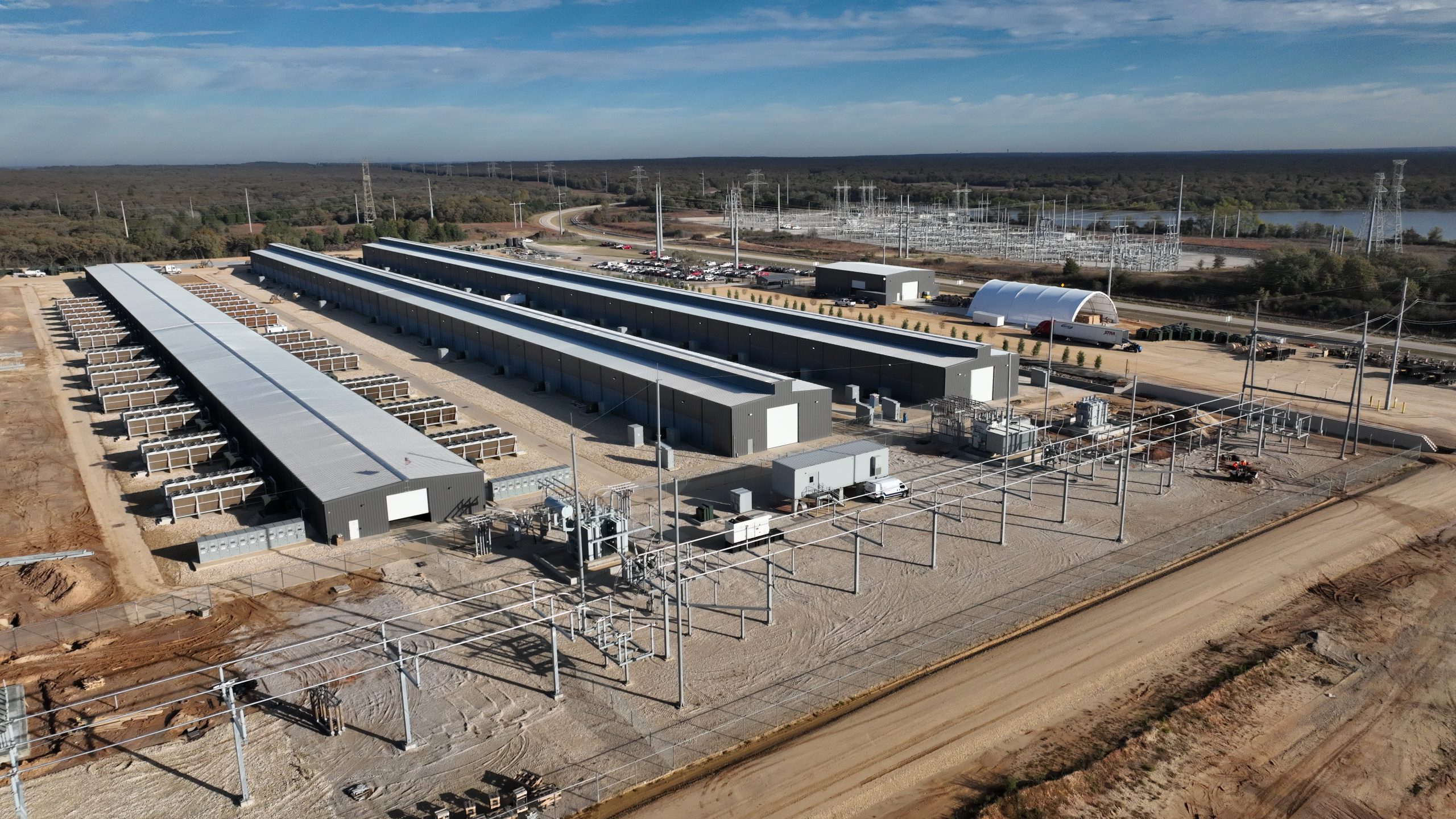
The Whinstone bitcoin mining facility, in context

The Whinstone bitcoin mining facility in Rockdale, Texas was, by metered capacity, the largest Bitcoin mining site in North America. I was the CEO. We broke ground in late 2019, deployed the first 300 megawatts in 183 days, and were running a 400-megawatt expansion concurrently. This post archives a December 2021 podcast conversation about how that build came together, what it took, and what I learned in the middle of it.

Whinstone, later acquired by Riot Blockchain, gets used as shorthand for ‘Bitcoin in Texas’ in a lot of trade press. That is fine. It is also incomplete. The Whinstone bitcoin mining facility was, before anything else, a grid problem and a workforce problem. The Bitcoin part was downstream of getting power, people, and a site to all line up at scale. This post puts the full audio on the page and frames the build with what I would say about it now.

Why this Whinstone bitcoin mining facility post is staying archived, not rewritten

Press archive policy on this site: keep the 2021 conversation as it was recorded. Add a new editorial frame on top, but leave the audio alone. The recording is the period source. The frame is current commentary. Both stay visible. Anyone landing on this page from a 2021 trade-press citation gets the original artifact plus the 2026 context.

How the Whinstone bitcoin mining facility actually got built

The short version. We picked Rockdale because the grid was there — abandoned aluminum-smelter capacity at the old Alcoa site, with substations and transmission already terminated on parcel. We picked the workforce because Milam County had craftspeople who knew industrial work and were ready for the next thing after the smelter wound down. We picked the build cadence because deferred capacity, on a Bitcoin schedule, is wasted capacity.

Six months from groundbreaking to first power on the first 300 megawatts. Then another year of expansion runway. The Whinstone bitcoin mining facility hit its capacity targets because the build sequence was non-negotiable — site civils, MV switchgear, dry-type transformers, immersion or air cooling depending on tenant, hosted hash on top. Skip a step, you lose six weeks. The team did not skip steps.

What the original podcast covers

The conversation, embedded below, walks through:

  • How a serial entrepreneur ends up running North America’s largest Bitcoin mining and hosting site (short answer: by accident, then on purpose).
  • How the Whinstone bitcoin mining facility was structured before and after Riot Blockchain’s acquisition in 2021.
  • Why a hosted-mining model made more sense than a pure self-mining model at the scale we were running.
  • What the impact of the Whinstone bitcoin mining facility was on Rockdale and the surrounding county — workforce, civic engagement, the small-town economic math of a 700-megawatt site landing in a place that did not have it last year.
  • What I thought was coming next at the time of recording. (Some of that aged. Some of it did not.)

Where the 2021 framing has aged

I do not use the $651 million acquisition figure on this site, and you will not see it in the new editorial frame. The trade-press number was widely repeated; I am not in the business of repeating it. The Whinstone bitcoin mining facility was sized to its build, not to a multiple. What it cost to build versus what it transacted at on the corporate side are different conversations, and only the build cost is mine to talk about.

The cycling stats I cite on the home page (33,243 miles since 2023, 773 rides, 607,747 feet of climbing, 1,668 hours, 20.9 Mt. Everests on a Pinarello with Shadow trotting alongside) are the current ones. They are not in the 2021 audio. If anything in the recording references older ride totals, the home page is canonical.

Whinstone bitcoin mining facility, then and now

Whinstone is still operating in Rockdale. The team kept building. The acquisition closed. The expansion ran. The site is one of the few documented examples of how to put 700 megawatts of compute on the ground inside a county that did not have it the prior year, without breaking the local grid or the local labor market. That is the part that is reusable across other build problems — including the AI infrastructure problem I am working on now under Savrn (/story/#ch-06).

The part of the Whinstone bitcoin mining facility story that is mine — the build cadence, the workforce instinct, the Texas-grid playbook — carried forward. That is what gets used on AI training campuses now. The chip changes; the grid math is the grid math.

Workforce and the Whinstone bitcoin mining facility

The thing the trade press never got right about the Whinstone bitcoin mining facility was the workforce. Most coverage stopped at the megawatt headline. Megawatts are easy to count. Trained people are not. The Rockdale workforce that built and operated this site came mostly from inside Milam County, with a meaningful chunk coming back from work that left the area when Alcoa wound down. That is not a small detail. That is most of why the project came in on the timeline it did.

I have written the workforce angle up properly in /story/#ch-05. The shorter version: a Whinstone bitcoin mining facility at this scale needs electricians, instrument-and-control techs, MV switchgear hands, civil crews, and a security and ops team that can operate around shift change without the site going dark. We hired most of that locally. We trained the rest. The community paid back the bet by showing up.

Why local hire mattered for the Whinstone bitcoin mining facility

Most large infrastructure builds in the US end up importing a contractor workforce that comes in on per diem and leaves at commissioning. Whinstone did not work that way. The county had craftspeople. The site was 24/7. Per diem labor on a 700-megawatt 24/7 operation breaks the unit economics of hosting before it breaks anything else. So local hire was not a charity move. It was a build-cost move that happened to also be the right thing to do for Rockdale. Both can be true.

The other consequence of the local-hire model at the Whinstone bitcoin mining facility: when shift turnover happened, knowledge stayed in the county. That mattered when the facility transitioned through the Riot Blockchain acquisition. The institutional memory was already inside Milam County rather than commuting in from out of state. That is not a small detail when you are trying to keep a 700-megawatt site running through a corporate change.

Listen to the original Whinstone bitcoin mining facility conversation

The full audio is embedded below, plus the original YouTube version. About 35 minutes. The host walks me through the build, the workforce impact, and the moment Whinstone became part of Riot Blockchain. Worth listening to as a period record of an industrial-scale infrastructure build, even if you do not particularly care about Bitcoin.

For the rest of the arc — what I built before Whinstone, what I am building after — start at /story/. For ride logs, /dispatches/. For the current AI infrastructure thesis, see chapter 6 of /story/.

[YouTube video embed: https://www.youtube.com/watch?v=GoLbJc7MClk]

Updated: 2026-05-10

← All Posts Today →
Scroll to Top